Why Some Children Constantly Seek Reassurance
Why Some Children Constantly Seek Reassurance
Understanding behaviour, learning, and nervous systems
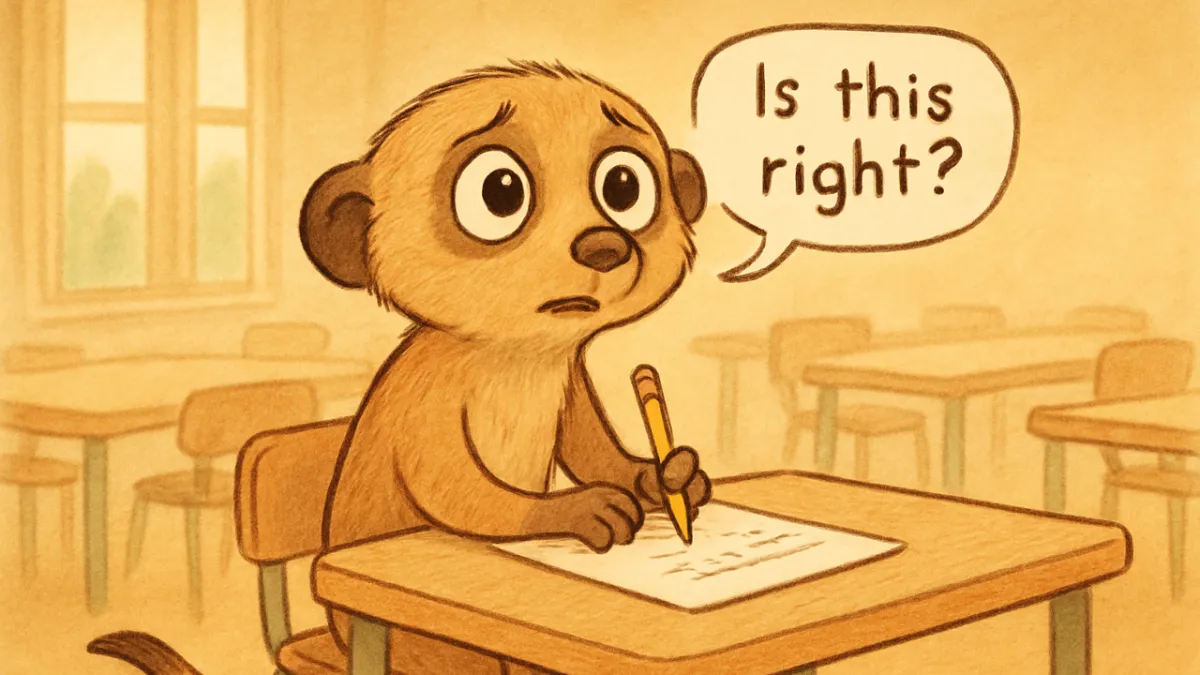
“Is this right?”
“Am I doing it properly?”
“Can you check?”
“Is this okay?”
Sometimes the question is asked before the child has even started.
Reassurance-seeking can feel exhausting to manage — especially when the child is clearly capable.
It’s often interpreted as:
insecurity
dependence
attention-seeking
lack of confidence
But for many children, reassurance-seeking isn’t about needing praise.
It’s about needing safety.
Reassurance-seeking isn’t a confidence issue alone
Yes — confidence is still developing for many children.
They are learning how to:
trust their own judgement
tolerate uncertainty
risk being wrong
hold ideas without immediate feedback
Those skills take time.
But reassurance-seeking often persists even when children know what to do.
That’s the clue that something else is happening.
What’s happening underneath
When a child’s nervous system is under stress, uncertainty can feel threatening.
In these moments:
decision-making feels risky
mistakes feel unsafe
internal reassurance is unavailable
So the child looks outward.
Reassurance becomes a way to say:
“Please help me feel safe enough to continue.”
This is especially common during:
open-ended tasks
writing and creative work
tasks with no single right answer
new or evaluative learning
Why “just have a go” often doesn’t help
A common response to reassurance-seeking is to push independence.
“You know how to do this.”
“Just try.”
“Be more confident.”
While well-intentioned, these responses assume the child can access:
self-trust
internal regulation
tolerance for uncertainty
Those capacities live in the thinking brain — and stress can temporarily block access to them.
Pressure doesn’t build confidence.
It often increases doubt.
The either/or trap again
Reassurance-seeking often pulls adults into extremes.
Either:
we repeatedly reassure, reinforcing dependence
orwe withdraw reassurance completely to force independence
Neither approach supports growth on its own.
Children need reassurance — and opportunities to build internal confidence.
How confidence actually develops
Confidence doesn’t come from being told “you’re fine”.
It develops when children:
experience uncertainty
receive enough support to stay engaged
act anyway
recover from mistakes
succeed over time
Reassurance should be gradually transferred, not abruptly removed.
Supporting reassurance-seeking without reinforcing it
Support might look like:
offering neutral, predictable responses
redirecting questions back to the child
naming effort rather than correctness
separating thinking from evaluation
staying emotionally present without over-checking
These strategies don’t abandon children.
They help them borrow calm until they can generate it themselves.
What reassurance-seeking tells us
Reassurance-seeking often signals:
uncertainty feels unsafe
confidence is fragile in that moment
the nervous system needs support to proceed
Seen this way, it’s not a flaw.
It’s communication.
A reframed question
Instead of asking:
Why does this child need so much reassurance?
We might ask:
What would help this child feel safe enough to trust themselves right now?
That shift changes how independence is built.
Reassurance-seeking isn’t the opposite of confidence.
It’s often the pathway toward it — when supported well.
These articles explore how stress and calm show up in everyday classroom moments.
The foundations that sit beneath them are explored in
The Daily Needs of Calm, Connected & Creative Classrooms — a practical guide for educators and parents who want to better understand how to support children’s learning, behaviour, and wellbeing.


