
Calm, connected and creative classrooms begin with small daily shifts.
WiseLearn gives educators practical, neuroscience-informed tools to support regulation, behaviour, and learning — without adding more to your workload.
A practical framework for calm, connected, and creative classrooms
WiseLearn helps educators support regulation by combining brain awareness with simple daily practices. Together, these layers create the conditions where children feel safe, focused, and ready to learn.
Understanding the brain

The Brain Friends help children understand how their brain works, giving them a shared language for their feelings, reactions, and learning experiences.
Regulation develops through small, daily steps
WiseLearn supports regulation by strengthening the daily foundations that help the nervous system feel safe, balanced, and ready to learn.
These foundations, combined with simple daily rhythms, create the conditions where calm, connection, and creativity can grow.

Regulation is not built in a single moment. It develops through small, supported steps across each day.
Start Here
Simple tools you can use immediately to support calm, connection, and learning.
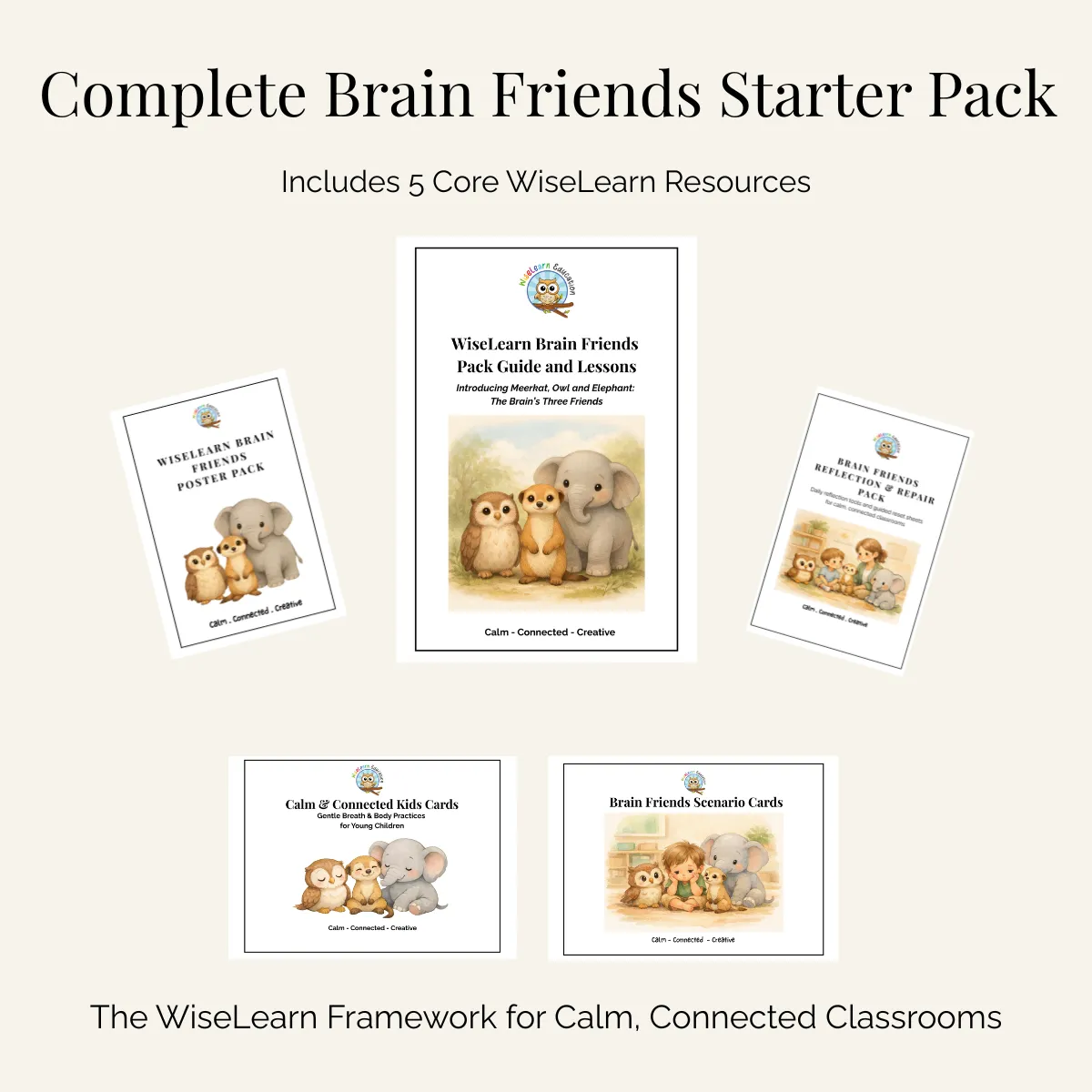
Everything you need to introduce the Brain Friends and build a shared language for calm, regulation, and learning.
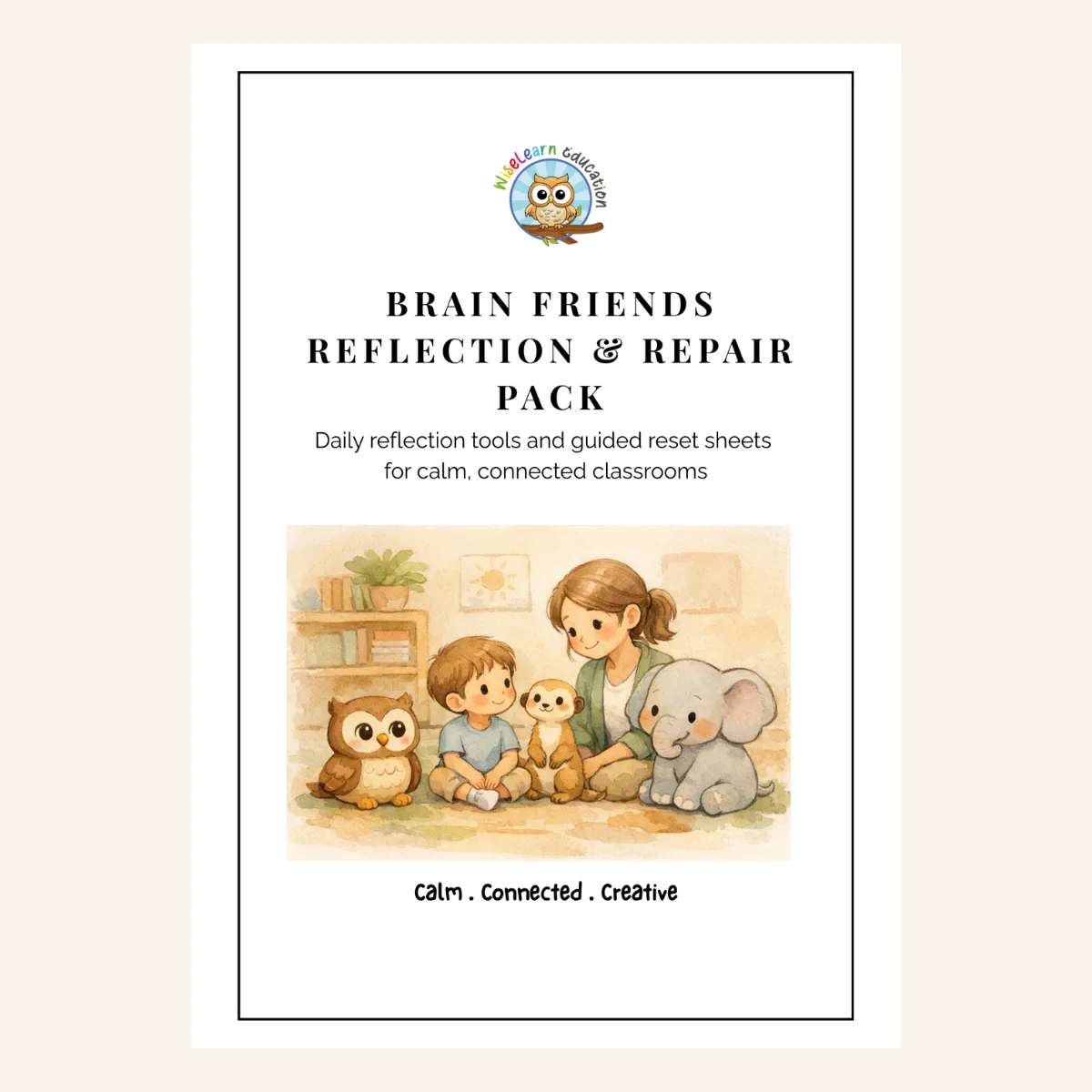
Gentle tools that help children reflect, repair, and reconnect after challenging moments.
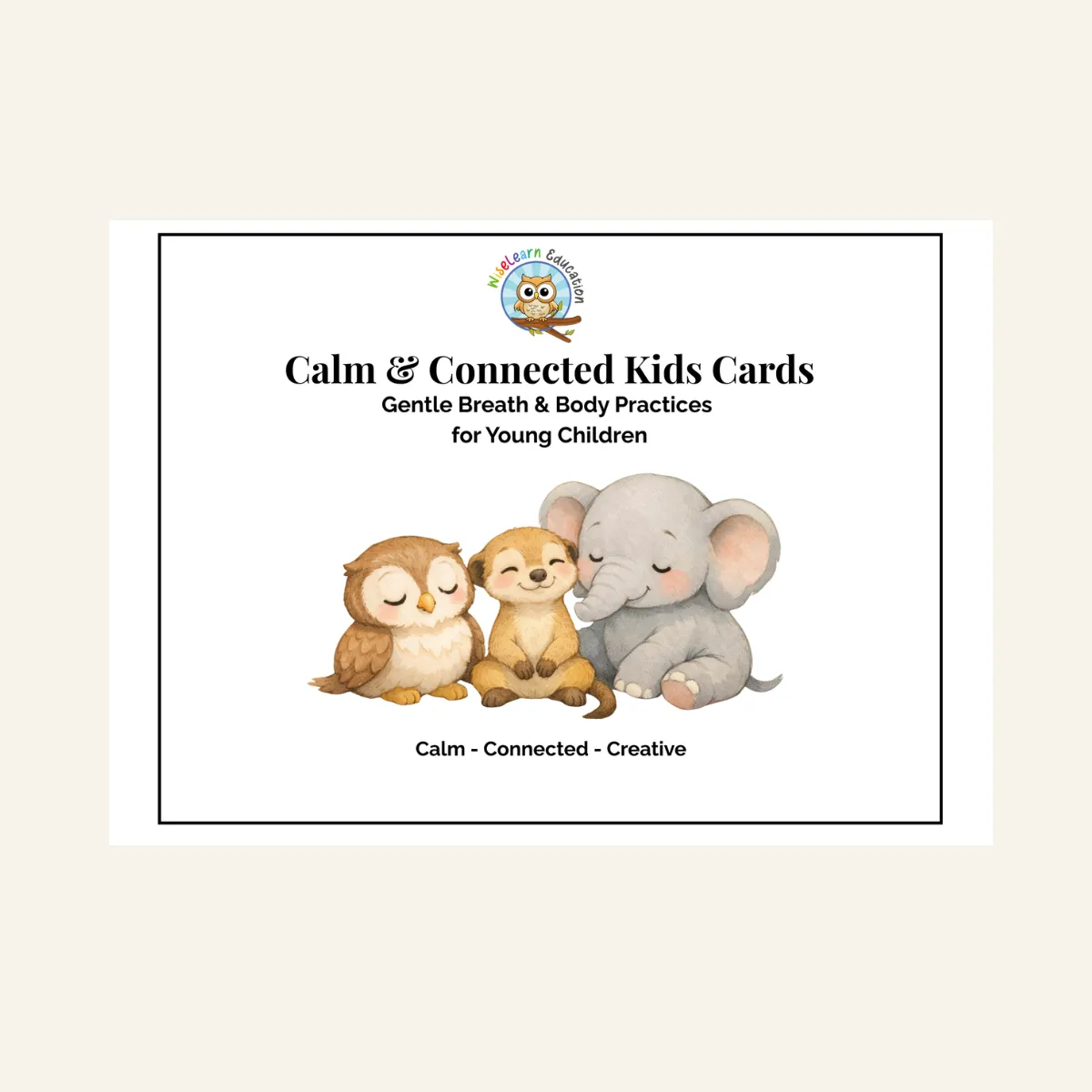
Simple, practical strategies to help children return to calm, focus, and readiness to learn.
Professional Learning Workshops
Live, online workshops that help educators understand regulation and apply simple, practical strategies in their classrooms immediately. Each session is designed to be calm, focused, and directly relevant to real classroom life.
✓ One-hour live online workshops
✓ Professional learning certificate provided
✓ Small, intentionally limited group sizes
✓ Practical tools you can use immediately
✓ Opportunity to ask questions and connect
✓ New and rotating workshop topics

The WiseLearn Philosophy
WiseLearn is grounded in a simple but powerful understanding: regulation is the foundation of learning.
Before children can focus, think, and engage, their nervous system must first feel safe and supported.
WiseLearn brings together brain awareness, intentional environments, and simple daily practices to help educators create these conditions.
Rather than adding more to an already full day, WiseLearn focuses on strengthening the foundations that support calm, connection, and creativity for everyone in the room.
This work is not about managing behaviour. It is about understanding the nervous system and designing classrooms where regulation and learning can develop together.
Working alongside educators and leaders

Follow WiseLearn
